

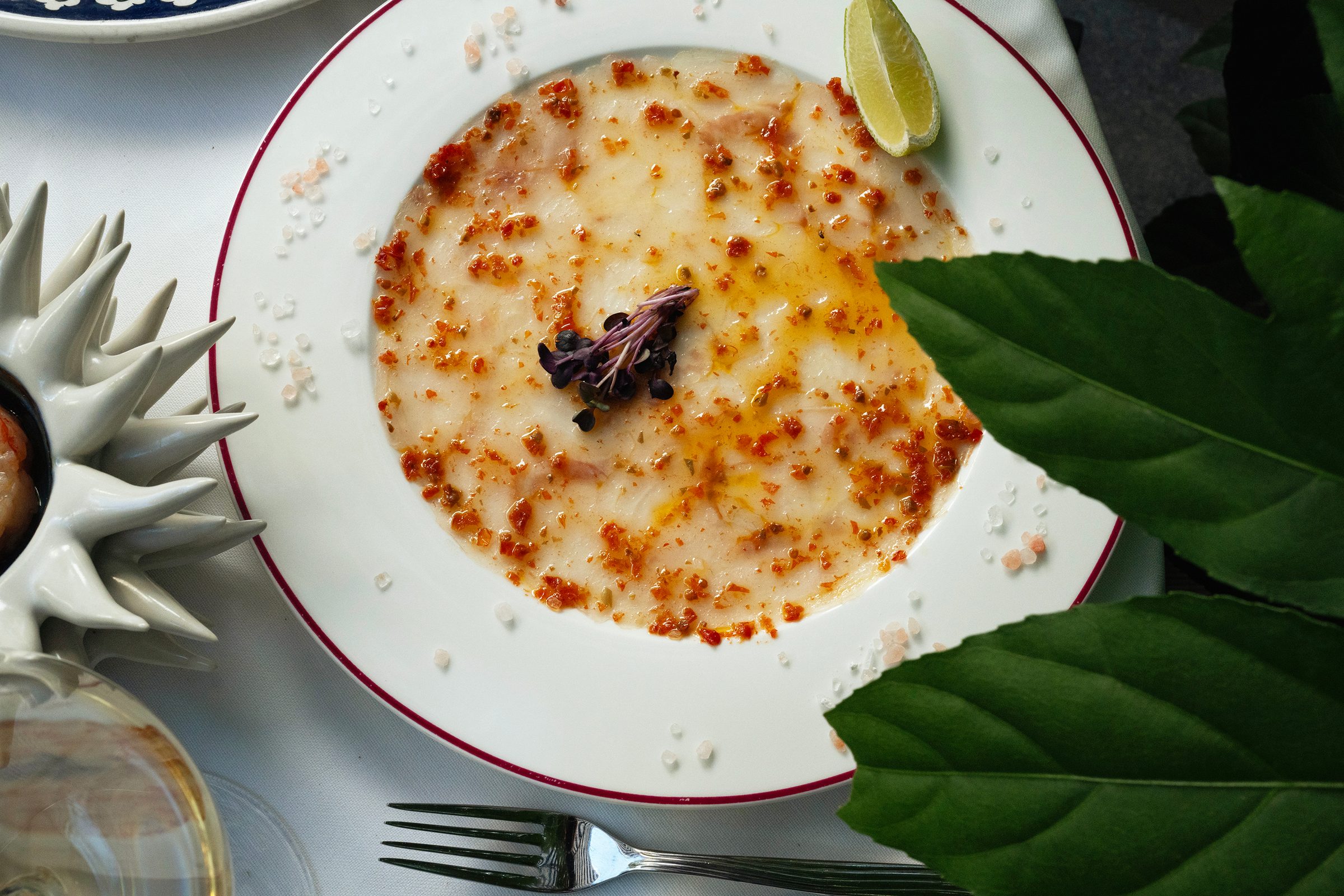
Why Milan is a seafood city
Milan has no coastline, but it is Italy's commercial capital and one of the country's main wholesale fish markets. Every night, seafood from Sicily, Sardinia, Liguria, Puglia and the Adriatic travels north to the city, which is why Milan has such a strong tradition of seafood restaurants, from neighbourhood trattorias to elegant dining rooms.
For visitors this is good news: you do not need to be on the coast to eat raw red prawns, a proper plate of spaghetti with clams or a whole fish baked in salt. You only need to know how to order.
Crudo: the Italian way to eat raw fish
Crudo simply means raw. Unlike sushi, Italian crudo uses very few ingredients: good olive oil, a little citrus, salt, sometimes a few herbs. The fish does the work.
- Carpaccio: thin slices of fish such as tuna or sea bass.
- Tartare: finely chopped fish, lightly dressed.
- Raw prawns and langoustines: served whole, to be peeled at the table.
- Oysters: served on ice, with lemon on the side.
A good rule is to start with the most delicate flavours, such as white fish, and move on to prawns and tuna. At Forte Garden the crudo section includes oysters, Mazara del Vallo red prawns and langoustines, tuna carpaccio and sea bass tartare.
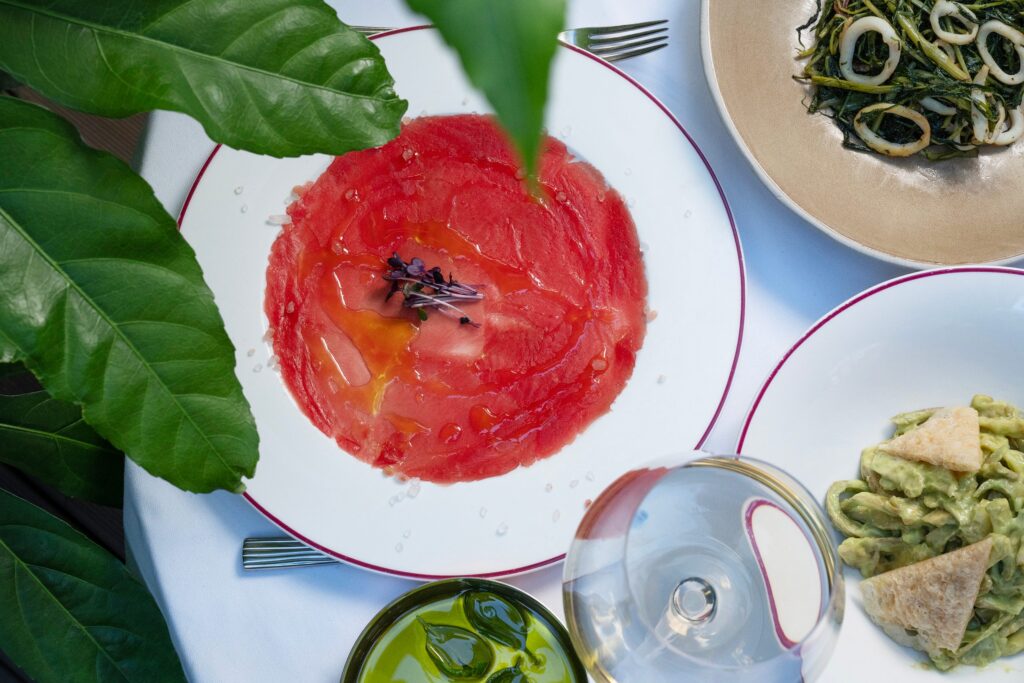
Mazara del Vallo red prawns, the "red gold" of Sicily
Mazara del Vallo is a fishing port on the south-west coast of Sicily, facing the Strait of Sicily. Its boats are known for deep-water red prawns, the gambero rosso, often called the red gold of the Mediterranean for their colour and sweet, almost creamy flavour.
They are at their best raw, with nothing more than a drop of olive oil. Many Italians also squeeze the head, where most of the flavour is. If you prefer them cooked, try them in pasta: at Forte Garden they finish a cacio e pepe, where the sweetness of the prawn meets pecorino and black pepper.
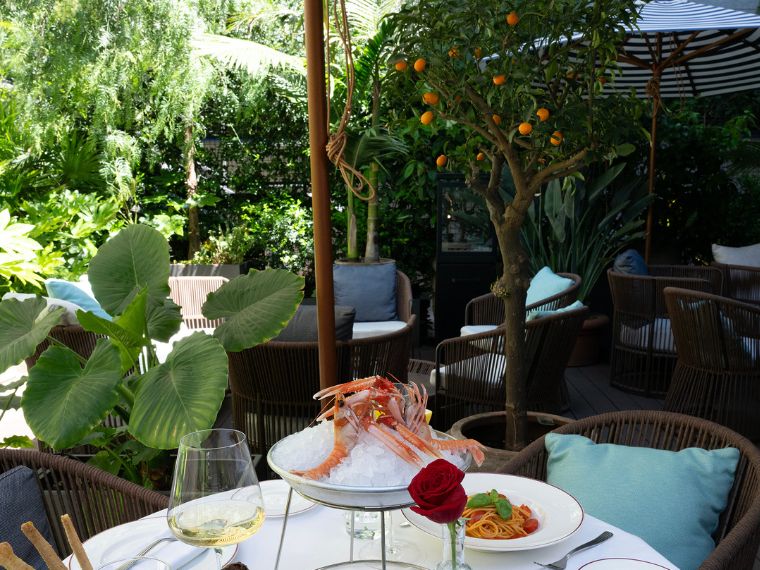
Oysters and the plateau, made for sharing
The plateau is a platter of raw seafood on ice: oysters, red prawns, langoustines and tartare, brought to the middle of the table. It is the easiest way for two or more people to taste a little of everything, and it pairs naturally with a glass of sparkling wine.
With oysters, keep it simple: a squeeze of lemon, or nothing at all. Ask the team which oysters are available that day; varieties change with the season and the catch.
Seafood pasta: what to order after the crudo
In Italy a pasta course often sits between the starters and the main course, and it is perfectly normal to share one. Some of the classics on our menu:
- Spaghetti with clams and bottarga: clams, garlic, olive oil and a grating of cured fish roe for depth.
- Gragnano tagliatelle with Mediterranean lobster: bronze-drawn pasta from Gragnano, near Naples, with Mediterranean lobster.
- Cacio e pepe with red prawn: a Roman classic with a Sicilian twist.
- Linguine alla Nerano: courgettes and cheese from the Sorrento Coast, a good choice for anyone who does not eat fish.
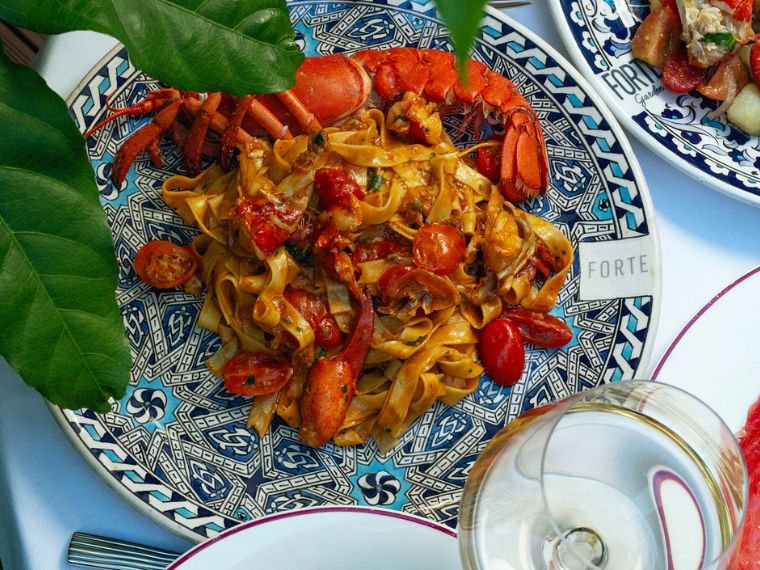
Main courses: whole fish, salt crust and the grill
For the main course, Italian seafood cooking stays simple. Sea bass baked in a salt crust keeps the fish moist and delicate; a mixed seafood grill and tuna tagliata are lighter, cleaner choices; fritto misto, the mixed fried seafood, is best shared. Fragolino soup, made with a small Mediterranean fish, is a warming option on colder evenings.
If you order a whole fish and prefer not to deal with the bones, simply ask for it to be filleted before it is served.
What to drink with seafood
Italian white wines are made for this kind of food. Look for fresh, mineral whites from the coast and the islands, such as Vermentino from Sardinia or Liguria, Fiano from Campania or white wines from Etna. Franciacorta, the sparkling wine made in Lombardy not far from Milan, works beautifully with crudo and fried fish. Our wine list is built around seafood, and the team is happy to suggest a pairing; cocktails are served too, before or after dinner.
Seafood in Milan in winter
The colder months are a very good time for seafood. Many Italians still follow the old habit of eating oysters in the months with an "r", and warm dishes such as fish soup or lobster pasta feel right when Milan turns grey. At Forte Garden dinner moves into the dining room in autumn and winter, with the same seafood menu; the garden reopens in the warmer months.
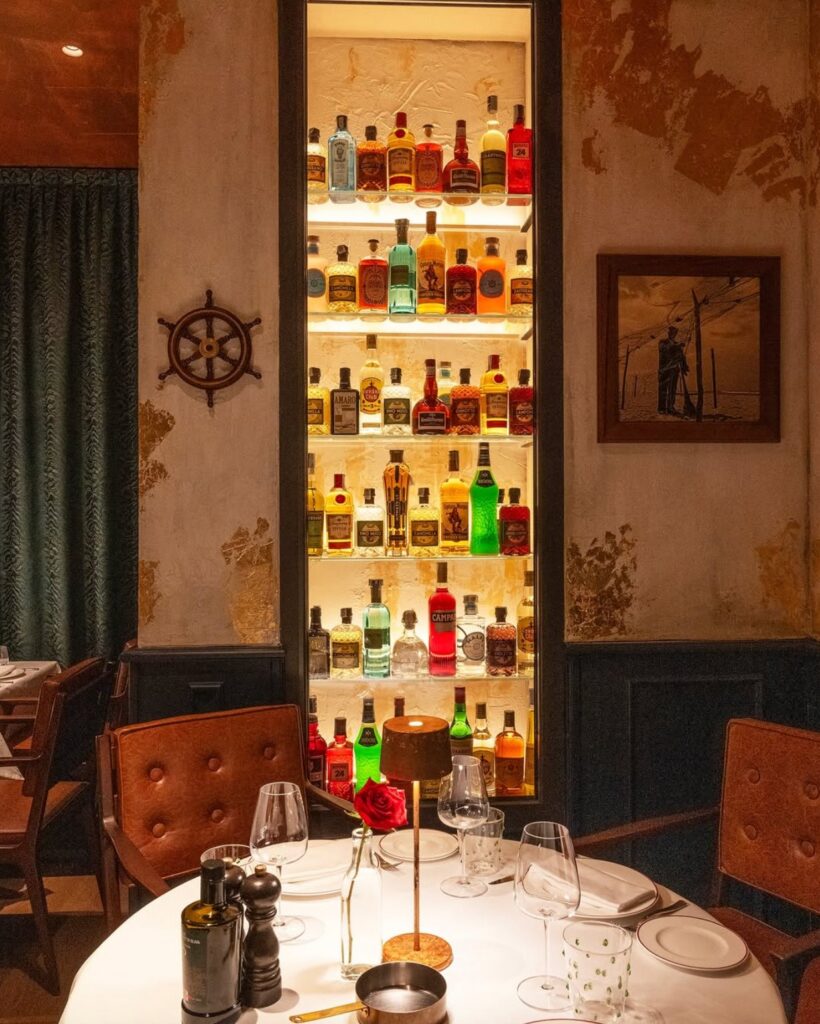
Planning a seafood dinner at Forte Garden
Forte Garden is at Via Benvenuto Cellini 14, 20129 Milano, in the Porta Vittoria area, a short walk from Piazza Cinque Giornate. The restaurant is open every day for lunch and dinner. Evening tables go quickly from Thursday to Sunday, so it is worth booking a few days ahead.
For birthdays, anniversaries, business dinners and private events there is a private room; write to info@fortemilano.com for groups. Book a table online or see the full menu.
In italiano: Forte Garden, ristorante di pesce a Milano.
Frequently asked questions
Is Milan a good city for seafood?
Yes. Milan has no coastline, but it is one of Italy's main wholesale fish markets, and seafood from Sicily, Sardinia, Liguria, Puglia and the Adriatic reaches the city every day. That is why it has such a strong tradition of seafood restaurants.
What is Italian crudo?
Crudo is raw seafood served very simply, usually with olive oil, citrus and salt: carpaccio, tartare, raw prawns and langoustines, and oysters. The idea is to let the quality of the fish speak.
What are Mazara del Vallo red prawns?
They are deep-water red prawns landed in Mazara del Vallo, a fishing port on the south-west coast of Sicily. They are prized for their colour and sweet flavour and are often eaten raw.
Where can I eat seafood near Porta Venezia and Cinque Giornate?
Forte Garden is a seafood restaurant at Via Benvenuto Cellini 14, 20129 Milano, in the Porta Vittoria area near Piazza Cinque Giornate. It is open every day for lunch and dinner.
Do I need to book a seafood dinner at Forte Garden?
Booking is recommended, especially in the evening from Thursday to Sunday. You can book online or by phone on +39 02 9476 7782. For groups and private dining, write to info@fortemilano.com.